
Clarifier scum beach: reverse-engineering a first-time-fit replacement from corroded remains
With the original carbon-steel scum beaches heavily corroded and no usable design record available, Frugal surveyed the remains, developed a stainless-steel replacement design, and delivered a fabrication drawing package that was installed successfully first time.
Sprint
Water treatment
Reverse engineering
Carbon to stainless steel
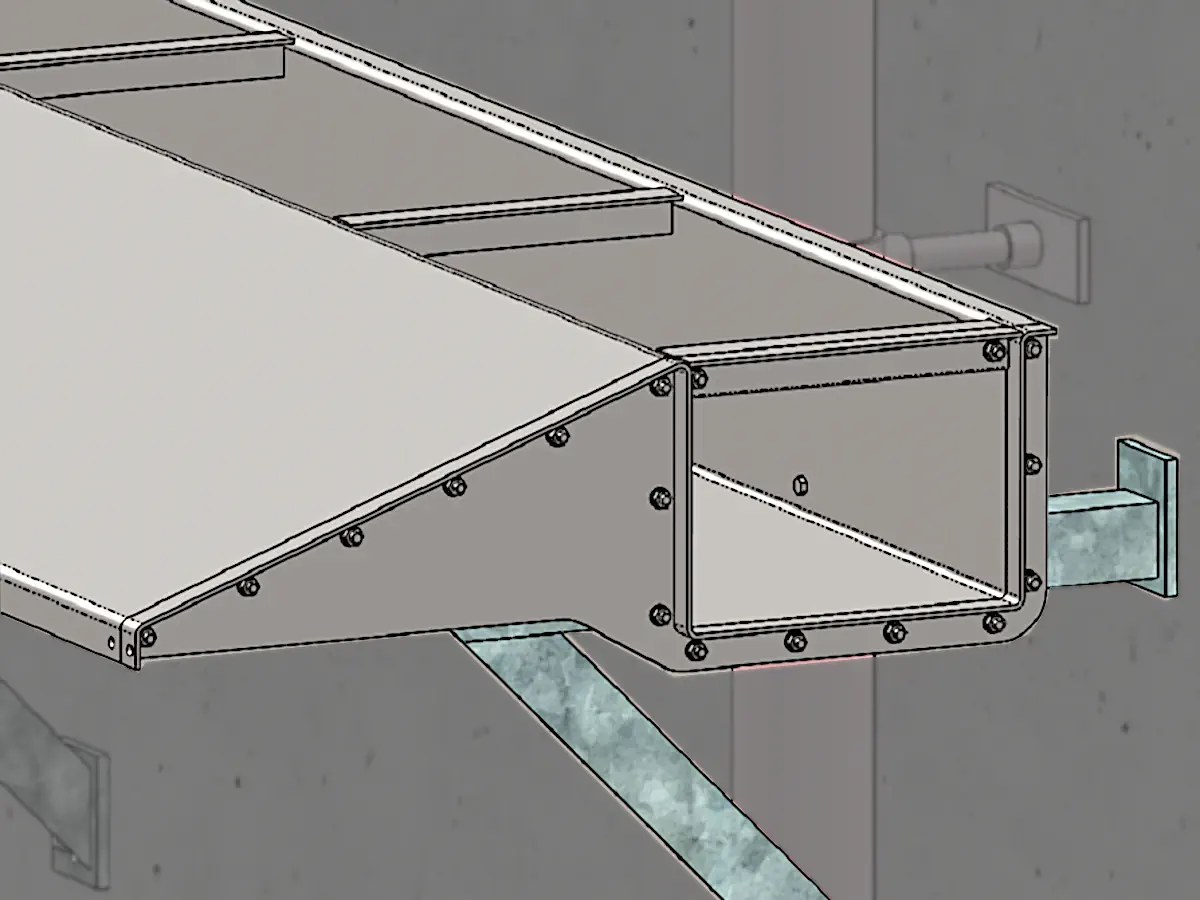
Model view of the replacement scum beach assembly
Situation
A water-treatment refurbishment required replacement scum beaches within an out-of-service clarifier tank. The existing assembly was heavily corroded carbon steel, with little useful information remaining beyond what could be observed and measured on site.
The client needed a replacement design and fabrication drawing package that could be made and installed with confidence as part of recommissioning the tank, while moving to stainless steel for longer service life.
The real problem
This was not a simple redraw. With no dependable legacy design record, a partially decayed existing installation, and a material change from carbon steel to stainless steel, the risk lay in missing the hidden assumptions, interfaces, and fit-up issues that make site replacements go wrong.
The task was to recover enough reliable information from the existing installation, apply engineering judgement where the original basis was unknown, and produce a replacement design and fabrication package that would go in cleanly without surprises.
Constraints
-
Minimal legacy information: The original scum beaches had to be understood mainly from what physically remained on site, with no dependable design record to work from.
-
Right-first-time installation: The replacement had to fit and install cleanly within the existing tank, with zero site welding and allowance for site variation and interface surprises.
-
Carbon-to-stainless change: Improved durability was the objective, but the new design could not simply be treated as a blind copy of the old carbon-steel assembly.
-
Practical mixed-material replacement: The stainless replacement parts still had to work sensibly with new galvanised carbon-steel supports, while keeping the overall solution durable and buildable.
Client:
Water-treatment fabricator / installer
Role:
Mechanical engineering consultant
Period:
2021
Scope:
Existing-condition survey +
Stainless-steel replacement design +
Fabrication drawing package +
Installation pack
Acceptance basis:
Existing installation + interface requirements
Engineering judgement
Model-based review
Successful fabrication + installation
Key moves
Surveying and reconstructing the existing installation
- Surveyed the remaining scum beach arrangement on site and built an as-existing reference model from what physically remained.
- Used that baseline to recover key geometry, interfaces, and dimensional assumptions before developing the replacement design.
Converting a corroded legacy assembly into a durable replacement
- Developed a stainless-steel replacement design that retained the necessary geometry and interfaces while resolving the material, durability and fabrication requirements of the new assembly.
- Incorporated practical detailing for mixed-material interfaces and corrosion management where new stainless parts met galvanised support steel.
Designing for clean fabrication and fit-up
- Produced a fabrication drawing package and installation information intended to go in cleanly within the existing tank, with no reliance on site welding or improvised adjustment.
- Applied engineering judgement and model-based review to check spans, fit-up, buildability and the mechanical design of the fabricated parts before release.
Selected snapshots

The original carbon-steel scum beach in heavily corroded condition
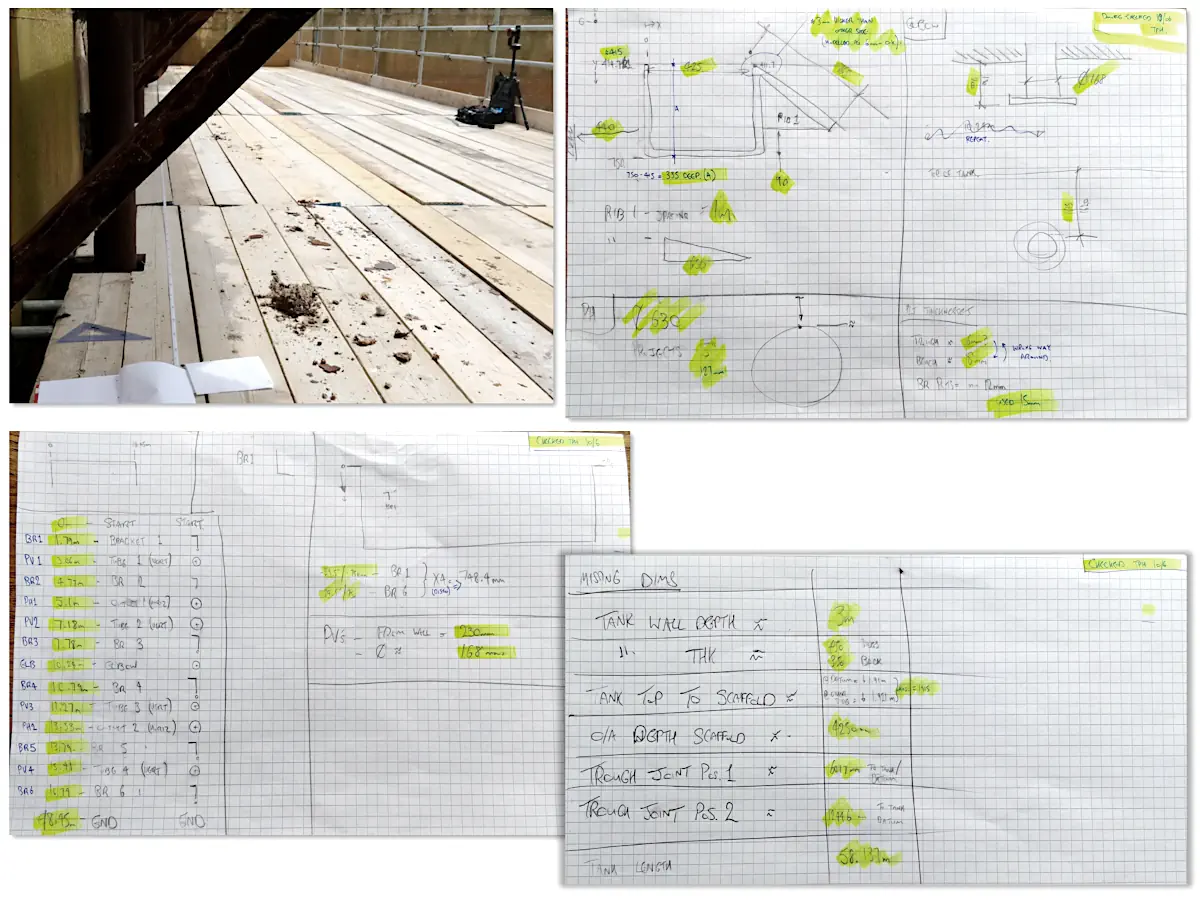
A site survey was carried out to recover the required dimensions in a single visit
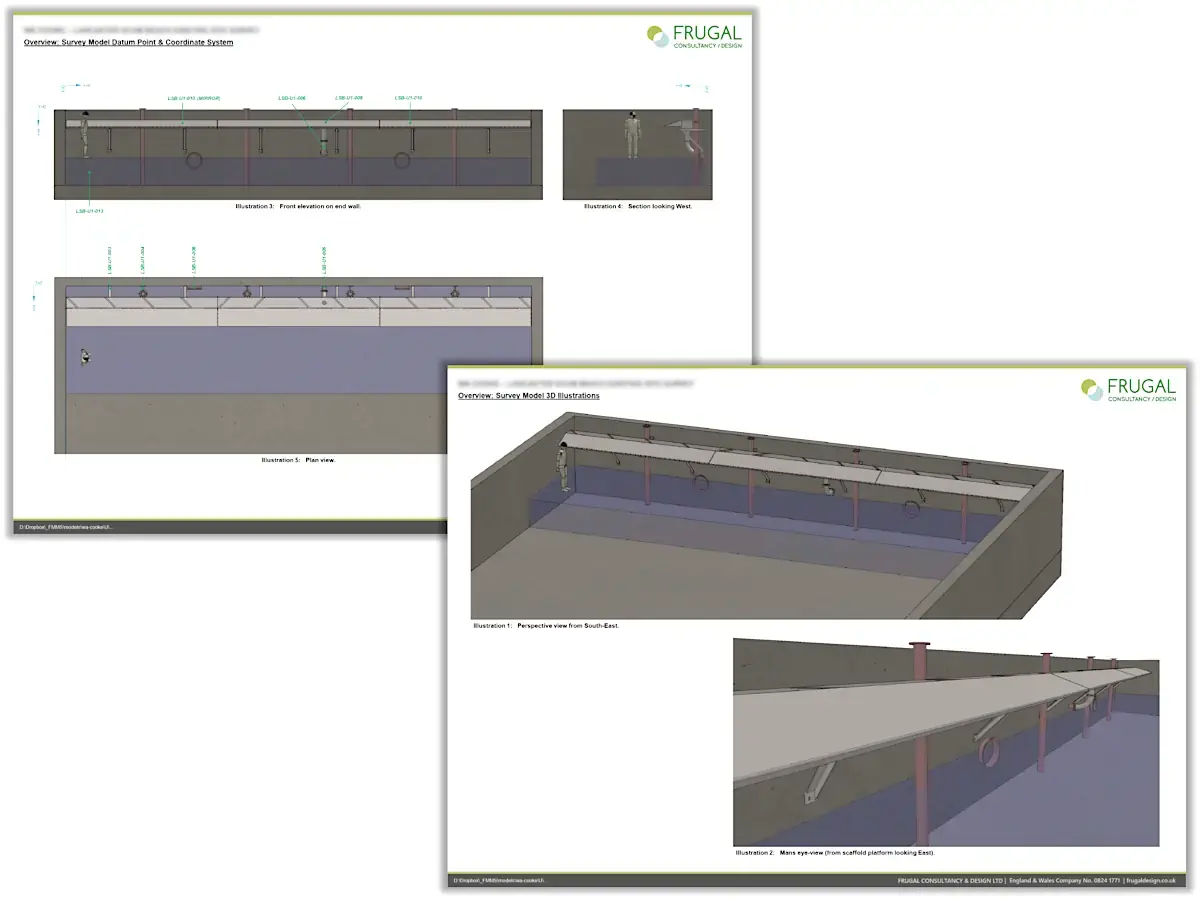
An existing-condition reference 3D model was produced from the survey data
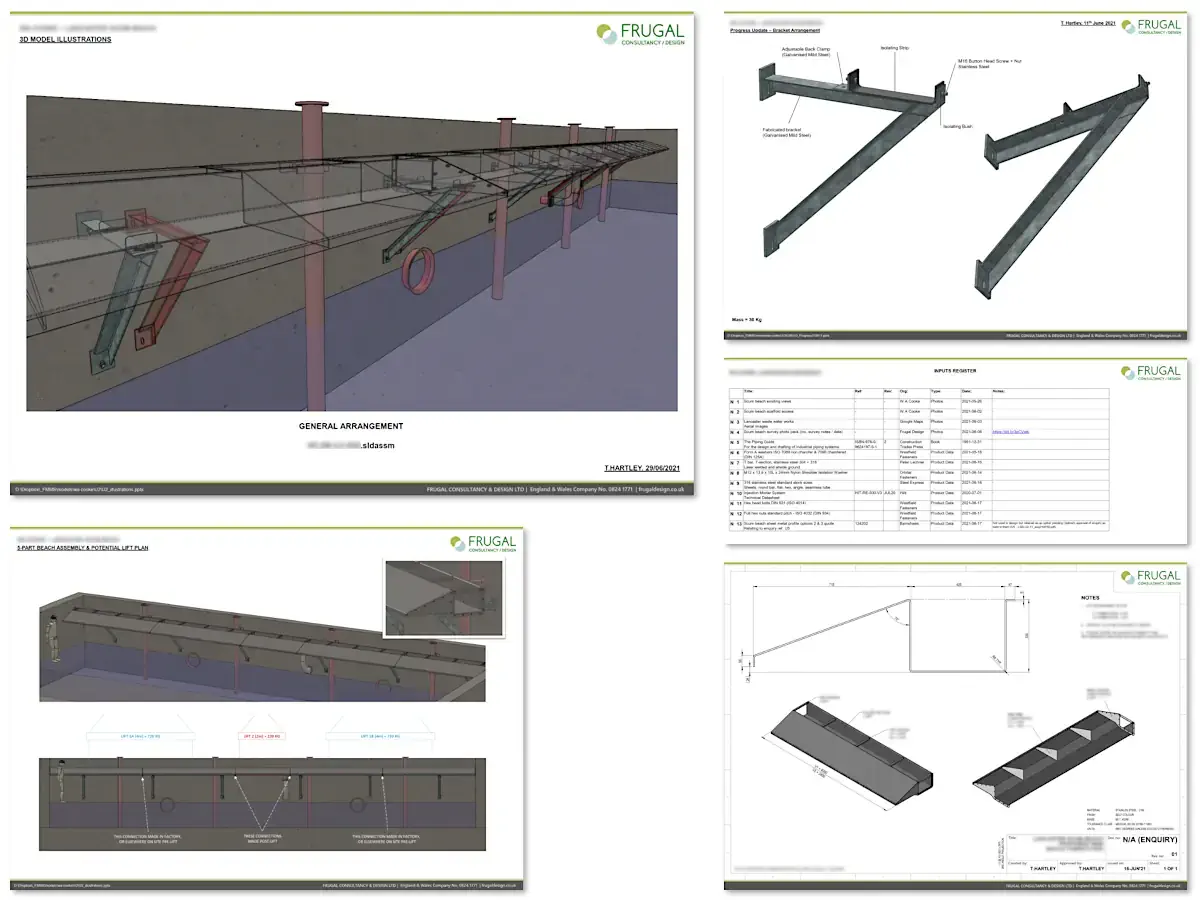
A full manufacturing-detail 3D model was developed for the reverse-engineered replacement
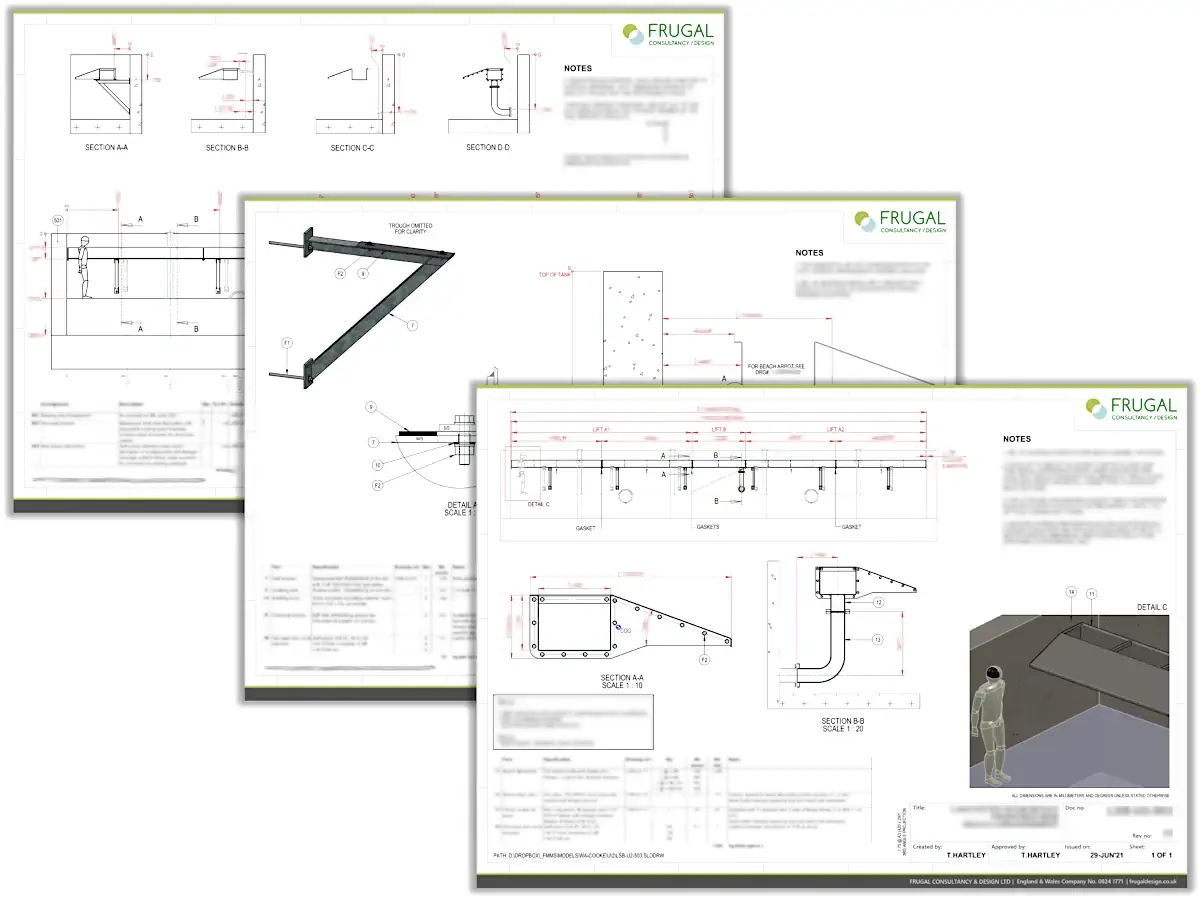
A full fabrication drawing package was produced, together with general-arrangement and installation drawings
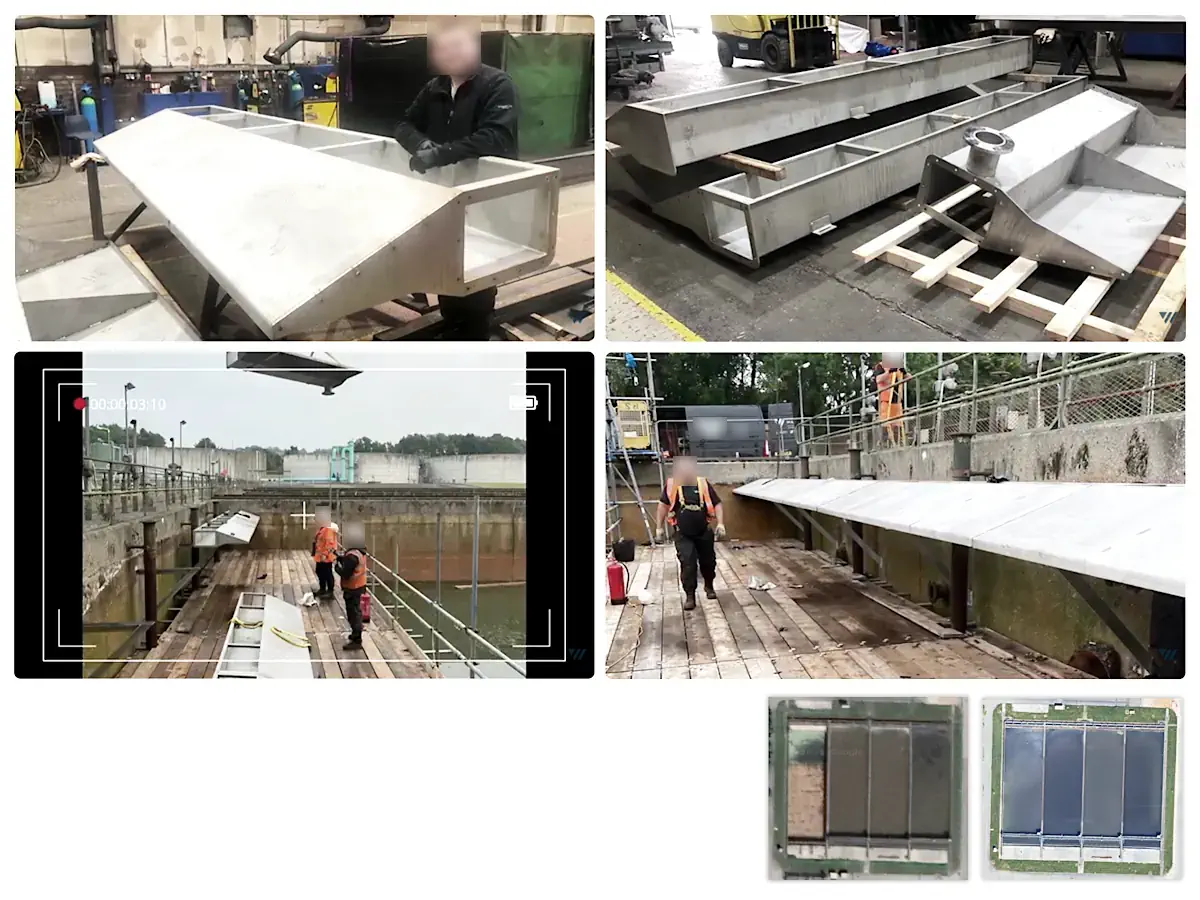
The stainless-steel parts were fabricated without issue and installed safely on site, right first time
Outcome
What this enabled
The work turned a heavily corroded, poorly documented legacy installation into a practical replacement design and fabrication package that could be manufactured and installed with confidence.
More broadly, it demonstrates how careful survey-led reverse engineering can reduce uncertainty in refurbishment work where the original design basis and dimensional records are no longer available.
Project outcome
Got an engineering design problem to solve?
Tell me what you’re dealing with and I’ll let you know whether I can help.