
Complex 3D CAD modelling and drawings
Robust, well-structured 3D CAD models and drawings for demanding components and assemblies.
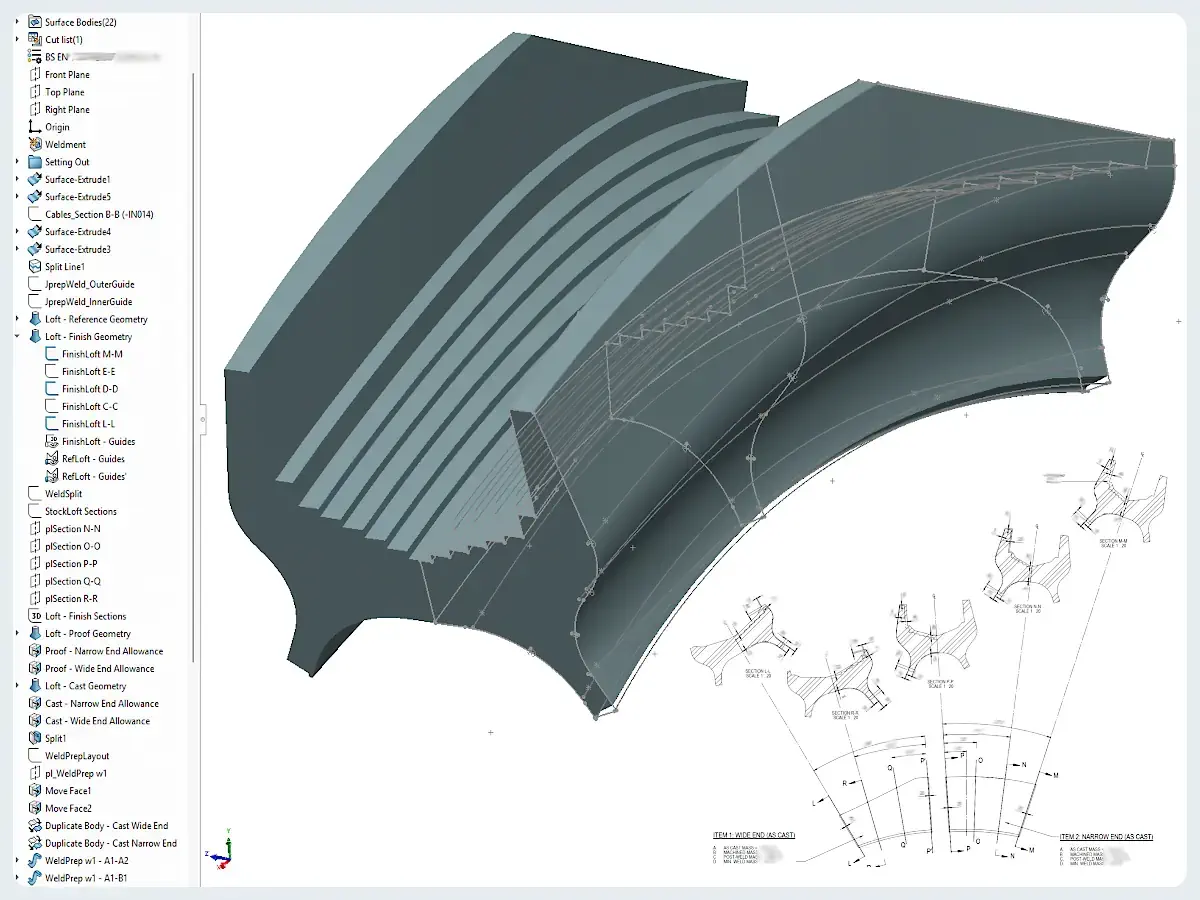
A design can already be well understood yet still be poorly represented in 3D. Incomplete, tangled or unreliable CAD makes reviews less effective, adds uncertainty to downstream engineering and prevents the model being reused with confidence.
This is particularly common where the geometry is awkward, the source information is fragmented, or the existing model has become too heavy or fragile to maintain.
I build accurate, well-referenced 3D CAD models and associated drawings in SolidWorks, structured around the work they need to support. The objective is not simply to reproduce the shape, but to create a robust engineering model that can be used confidently for design review, analysis, drawings, manufacture and future development.
Is this you?
- Your existing CAD is too heavy, fragile or poorly structured to build on with confidence.
- The geometry is genuinely awkward, and the current model relies on compromises that affect its accuracy or usability.
- Design reviews and downstream work are being constrained by the model rather than supported by it.
- You need a model that can be reused confidently for analysis, drawings, layout, review or long-term record.
- You need engineering judgement as well as CAD capacity, so the model is built around its purpose, interfaces and downstream use.
Approach
This usually starts with a review of the available drawings, models and other reference information. I then define how the model needs to be built for its intended use, including the required accuracy, structure, references, configurations and outputs. That model plan acts as a clear brief and sets the acceptance criteria before detailed CAD work begins.
I then build the model to that basis. For difficult geometry, I establish and test a modelling strategy that preserves the required accuracy without making the model unnecessarily heavy or fragile. Where drawings form part of the package, I develop them from the controlled model to suit their agreed purpose, whether for review, manufacture, inspection or record. For larger model sets, I use a model-control schedule to track file purpose, source information, status and other key data.
The result is not simply a visual 3D shape. It is a controlled engineering model that is traceable to its inputs, efficient to use and structured for the work that follows. This improves review quality, reduces ambiguity and makes downstream work easier across engineering, manufacturing, quality and commercial teams.
At a glance
Engagement modes
Typical inputs
Reference information: drawings, sketches, measurements, photographs or scans · The model’s intended use: development, review, analysis, drawings or record · Known constraints: interfaces, tolerances, output formats and software requirements
Typical outputs
Accurate 3D part and assembly models · Robust structure with captured design intent · Associated drawings, mass properties, motion studies or analysis-ready geometry
Where it sits
Wherever a trustworthy 3D model is needed to support design review or downstream engineering.
Related case study
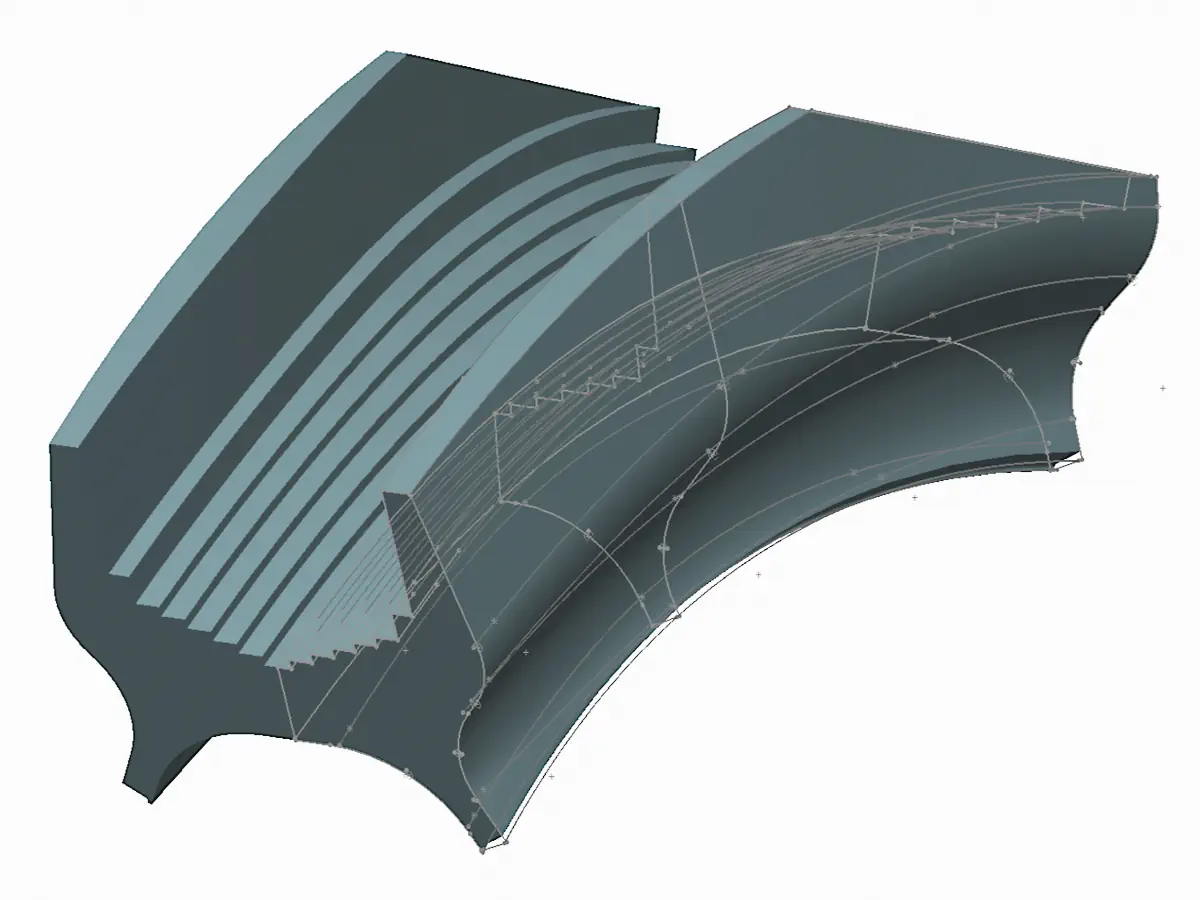
Suspension bridge castings
Frugal developed detailed 3D models and manufacturing proposal drawings for a set of suspension bridge saddles, translating complex structural reference drawings into a coordinated package supporting foundry, fabrication, machining and costing review.
Common questions
A few quick answers about inherited models and preparing CAD for downstream use.
Need a 3D model you can rely on?
Tell me what the model needs to support and what source information already exists, and I’ll outline the most sensible route forward.