
Design development to manufacturing-ready release
Take a chosen concept through to a resolved, buildable release package.
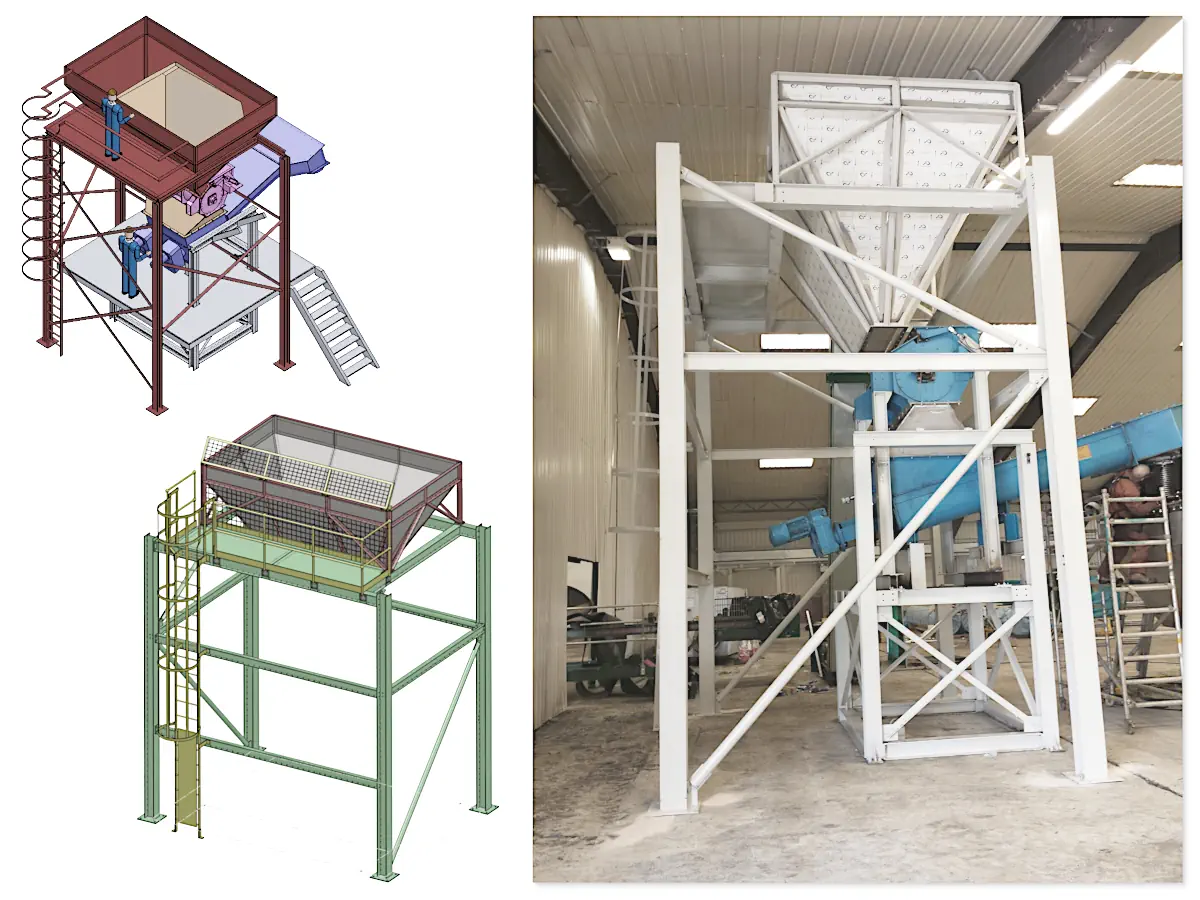
Once the direction is clear, the next step is to resolve the engineering properly. I develop the design to an agreed release point by closing down interfaces, detailing the parts that matter and turning the concept into something that can be built, reviewed and released with confidence.
This is the most delivery-focused stage of the work: detailed mechanical design of machined and fabricated parts and assemblies, resolving welded details where needed, and producing the information required for manufacture, checking and controlled release.
Is this you?
- You’ve settled on a direction and now need it turned into something that can actually be built.
- The concept exists, but the detail doesn’t: interfaces, tolerances and fabrication details are still open.
- You need a clean release package: drawings, models and BOMs, not just a good-looking model.
- Extra CAD capacity alone isn’t enough: the decisions behind the geometry matter just as much.
- A design needs finishing properly before it goes to a workshop, supplier or client.
Approach
This usually starts with a chosen concept, a brief stable enough to design against, and an agreed definition of what “manufacturing-ready” means for the job. That includes the intended release purpose and the level of checking, substantiation and approval needed before issue.
I then work through the engineering needed to turn that direction into a deliverable design: sizing and defining components, resolving interfaces, designing for manufacture and assembly, setting tolerances, accounting for supplier constraints and making the practical decisions needed to make the package usable.
The objective is a coherent, buildable design package, not merely a set of files. It should be properly matched to its intended next step, whether prototype manufacture, production release or onward integration.
This is usually the core delivery sprint once the earlier definition and trade-off work is complete. From there, the next stage may involve prototype build support, further substantiation or testing, or a follow-on sprint if detailed design reveals that an earlier requirement or decision needs to be revisited.
At a glance
Engagement modes
Typical inputs
An agreed brief and chosen concept direction · Existing design information: layouts, CAD, interfaces and prior decisions · A clear definition of the intended release point, such as prototype manufacture or production release
Typical outputs
A resolved, buildable design package for the intended next step · Engineering drawing packages (PDF) · Fabrication drawing packages where required · Supporting outputs as agreed: 3D CAD models, BOMs, design risk information and calculations or substantiation
Where it sits
The core delivery phase, once definition and concept work are done.
Related case study
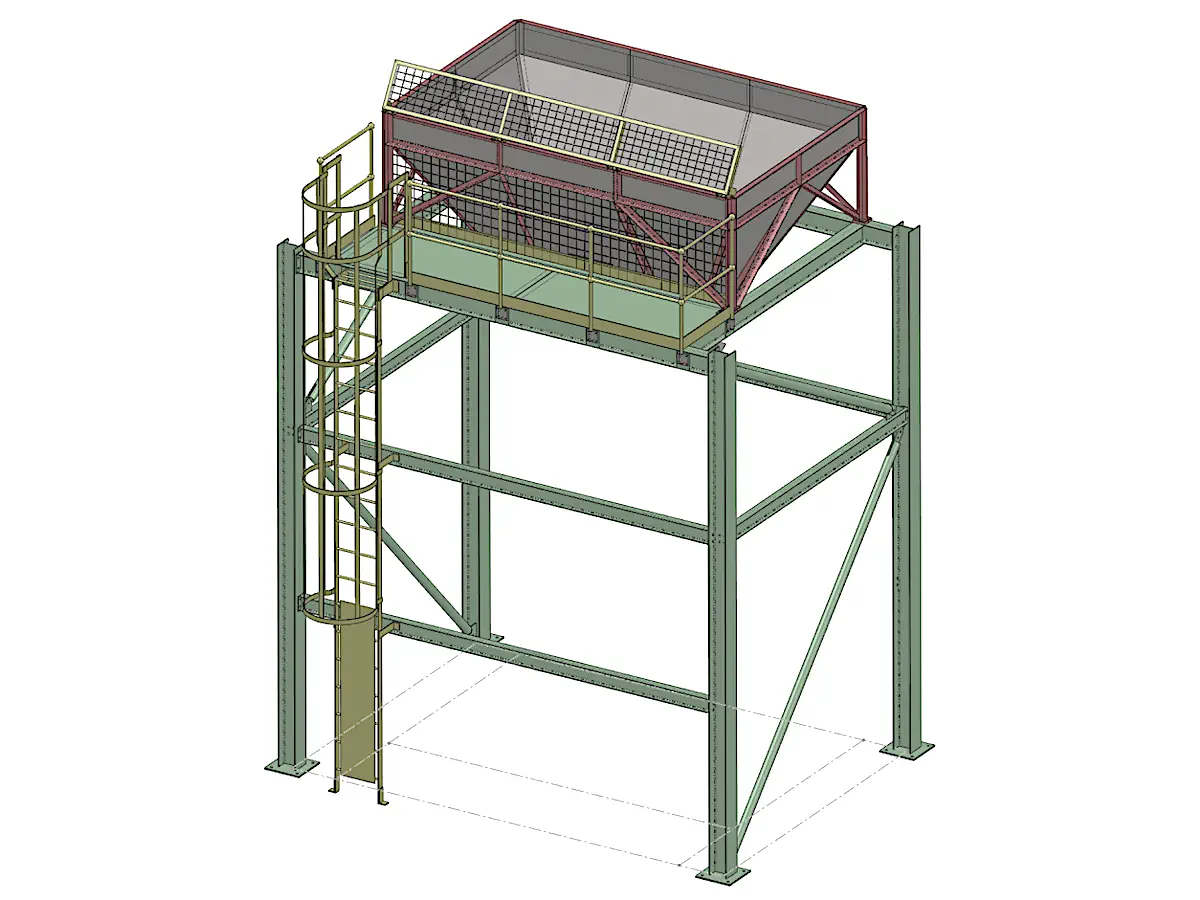
Woodchip hopper
A small industrial equipment package within a wider plant layout called for a woodchip hopper, support frame and access features. Frugal developed the client’s rough arrangement into a lighter, rationalised design for manufacture, including connection verification, 3D CAD and fabrication drawings.
Common questions
A few quick answers about detailed mechanical design, CAD and manufacturing-ready release packages.
Got a concept that needs making real?
Tell me where the design is now and where it needs to get to, and I’ll let you know how I can help.