
Concept generation, comparison & selection
Generate and compare concepts, then recommend a defensible route forward.
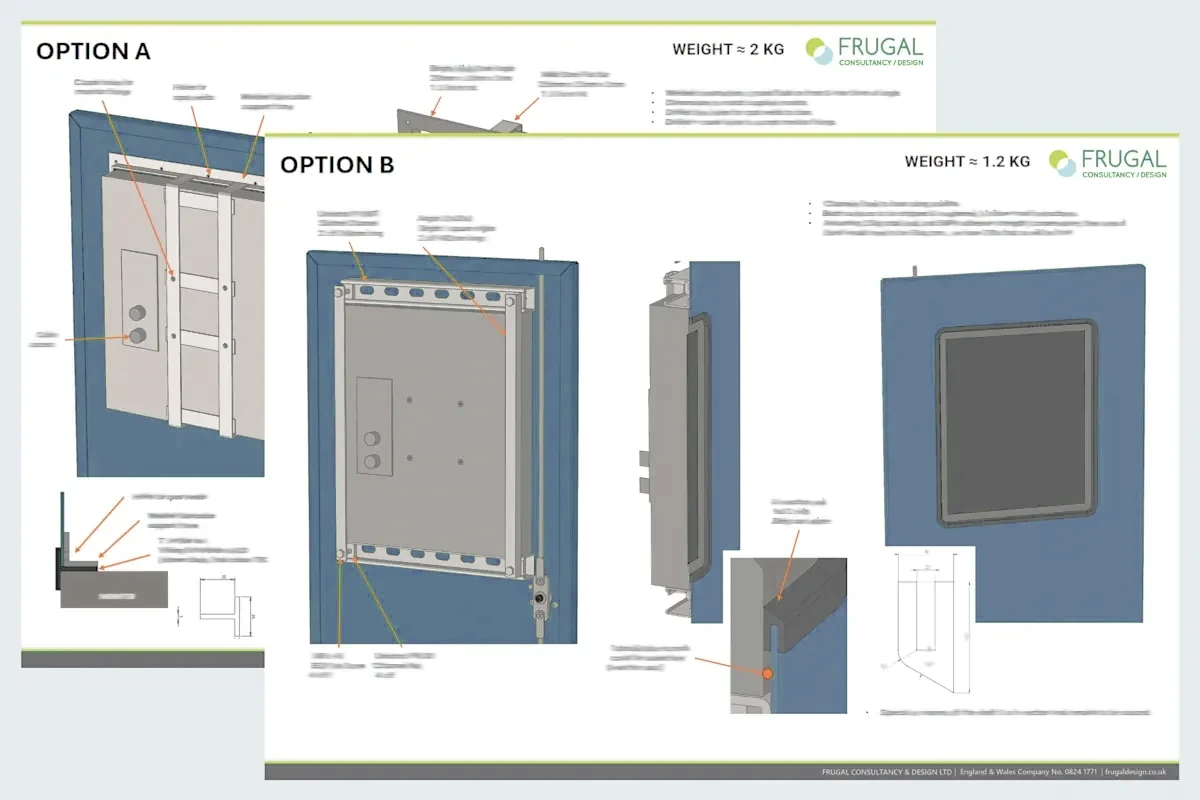
Once the brief is clear enough, the next risk is choosing a concept too early, too instinctively or from incomplete information. I develop candidate engineering concepts far enough for them to be compared on a clearer footing: illustrated, quantified where useful, and assessed against the requirements and constraints that matter.
This is useful in industrial equipment design and mechanical product development, particularly where several plausible concepts for a fabricated system, mechanism or assembly need to be compared before detailed design begins.
Is this you?
- You’ve got an idea and a nagging doubt: it might be ok, but you haven’t tested it against alternatives.
- Several plausible routes are on the table, and the argument for each keeps going in circles.
- The choice is being driven by habit or opinion rather than a clear understanding of the trade-offs.
- You need to show others why a route was chosen, and “it felt right” won’t cut it.
- A concept was picked early, and you’d like a sanity check before committing to detailed design.
Approach
This may start with client-provided concepts, rough layouts or partial ideas already on the table. It may also involve generating additional routes where the existing options are too narrowly framed, insufficiently developed or not yet tied closely enough to the real requirements.
From there, I develop each concept far enough to support a meaningful comparison. That may involve clearer sketches or layouts, simple calculations or space claims where useful, and an explicit assessment against agreed criteria. Assumptions, dependencies and likely implications are made visible so that the real trade-offs can be understood.
The aim is to establish which route best meets the brief, what compromises it carries and what still needs to be resolved. A clear options pack also makes the decision easier to explain internally, particularly where established habits or departmental preferences might otherwise dominate.
Concept development is usually iterative. Options may be refined, combined or ruled out as the comparison progresses. Done well, the client is left with a clear record of the decision and, often, a preferred route developed far enough to move naturally into a defined-scope delivery sprint.
At a glance
Engagement modes
Typical inputs
A reasonably clear brief · Existing sketches, concepts or rough layouts · Known priorities and constraints, such as cost, space, weight, lead time, manufacturing method and applicable standards
Typical outputs
A concept options pack · Annotated sketches and illustrations · Comparative assessment · A reasoned recommendation or shortlist, with the main trade-offs and next steps made clear
Where it sits
Once the brief and decision criteria are clear enough, before detailed design begins.
Related case study
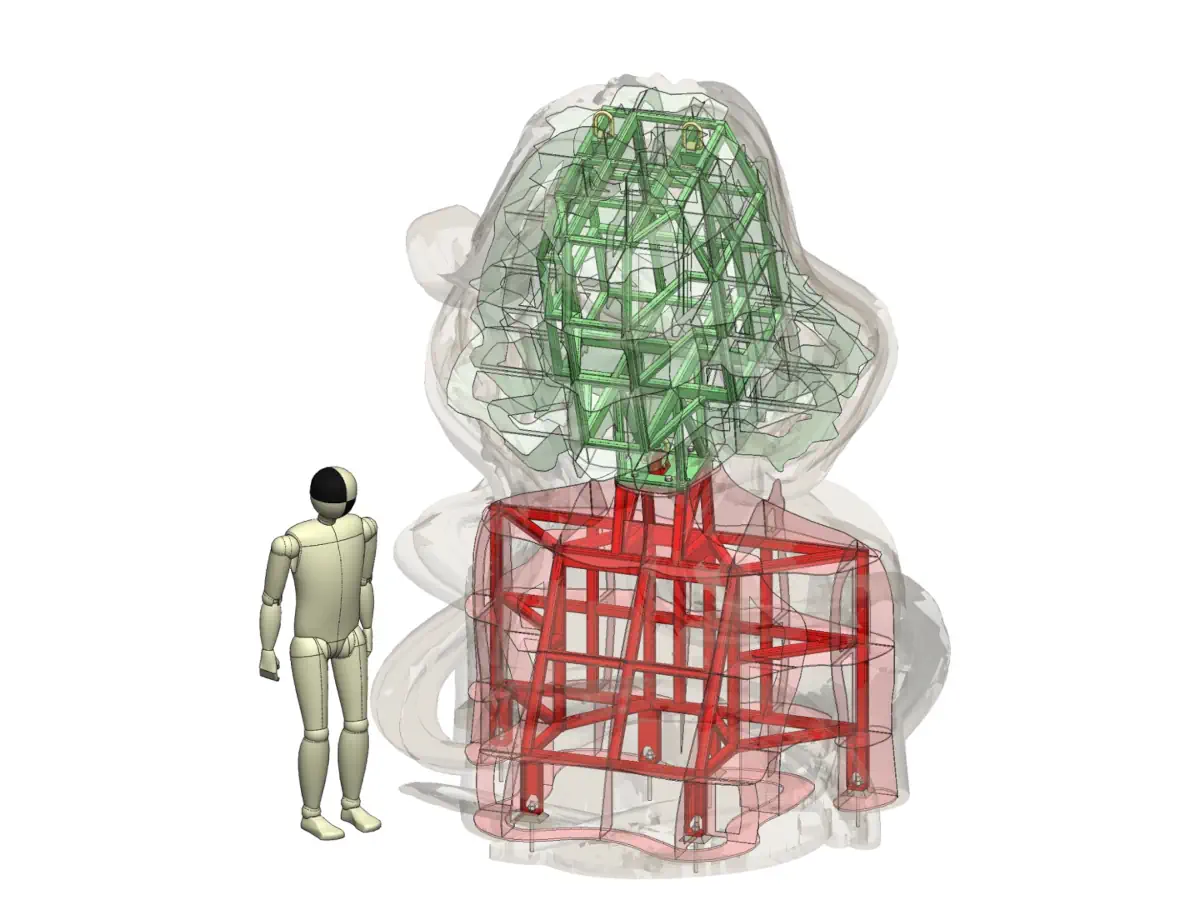
Sculpture support frame
Frugal established the geometry basis, frame architecture, critical interfaces and delivery strategy needed to turn complex artist geometry into buildable steelwork, then applied that route to the support-frame design for a large rooftop sculpture.
Common questions
A few quick answers about developing and comparing engineering concepts.
Weighing up a few possible routes?
Tell me what you’re choosing between and I’ll let you know whether a concept comparison would help.