
Geodesic projector screen: remote development of a buildable folded-sheet 3D screen system
Working from a previously purchased geodesic frame in Chicago, Frugal developed a remote survey approach, reconstructed the geometry in 3D, and delivered a supplier-ready folded-sheet screen design that the client could manufacture and assemble right first time.
Sprint
Immersive advertising
Remote survey-led
Practical procurement + assembly
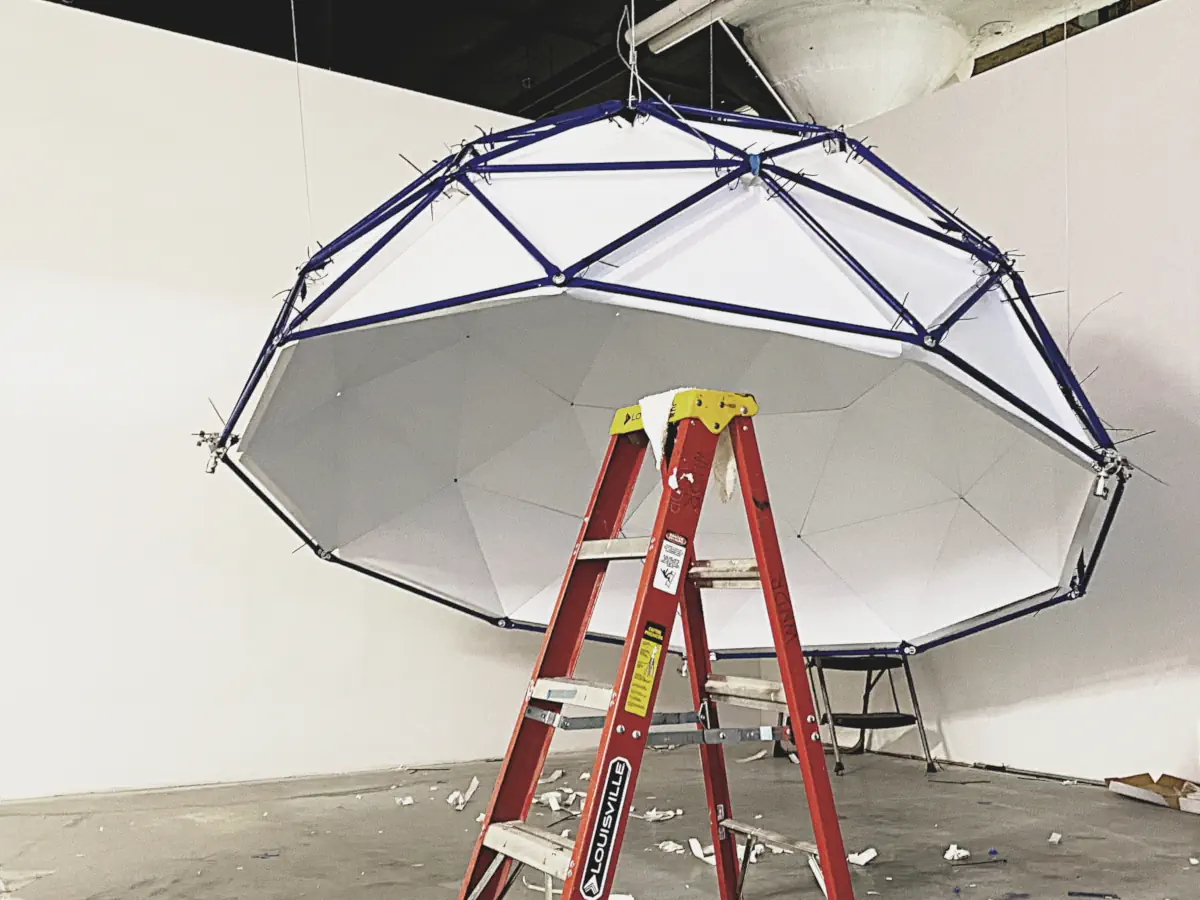
Final screen assembled by the client in Chicago from Frugal’s flat-pattern and assembly outputs
Situation
The real problem
The main challenge was the lack of dependable dimensional definition for the existing frame. With the frame in Chicago and the starting information incomplete, Frugal needed to devise a reliable remote survey method, identify the minimum measurements that controlled the geometry, and develop a screen design able to accommodate likely survey and assembly variation.
The value lay in reconstructing the frame geometry accurately enough to produce supplier-ready flat patterns and clear assembly information.
Because the client intended to source the parts locally and assemble and fit the screen independently, the design also needed to support a practical build route rather than exist only as an idealised CAD model.
Constraints
-
No dependable design record: Geometry had to be reconstructed from limited remote information.
-
Remote survey only: All geometric definition had to be established with no direct access to the frame.
-
Tolerance at the interface: The design needed to accommodate likely survey, manufacturing and assembly variation.
-
Client-led procurement and build: The route had to suit local sourcing and self-managed assembly.
-
First-time manufacture: The issued cut files needed to produce parts that would assemble and fit without a redesign cycle.
Client:
Visual Feeder (opens in a new tab)
Role:
Mechanical engineering consultant
Period:
2021
Scope:
Remote frame survey method +
3D geometric reconstruction +
Folded-sheet screen development +
Supplier-ready cut-file output
Acceptance basis:
Fit to existing frame +
Local manufacture from issued files +
Successful first-time assembly
Key moves
Used preliminary modelling to define the survey
- Developed a first-pass 3D model of the geodesic frame from the client’s photographs and assembly instructions.
- Used the model to identify which dimensions controlled the geometry, allowing the remote survey to focus on the measurements that mattered.
Verified the reconstructed geometry with check dimensions
- Updated the model using the client’s key measurements, then predicted a set of secondary check dimensions from it.
- Asked the client to measure those dimensions separately, providing an independent cross-check of the reconstructed geometry before the screen was developed against it.
Designed the screen for fit-up resilience
- Developed the folded polypropylene facets, facet-to-facet joints, and the connection approach between the screen and the steel frame.
- Tested the effect of likely dimensional and assembly variation to check that the screen would still assemble and fit in practice.
Issued supplier-ready flat patterns
- Produced 1:1 unfolded flat patterns for CNC profiling, including features to help with identification, positioning, and assembly.
- Exported the final profiles in SVG format for straightforward procurement through the client’s chosen local supplier.
Selected snapshots
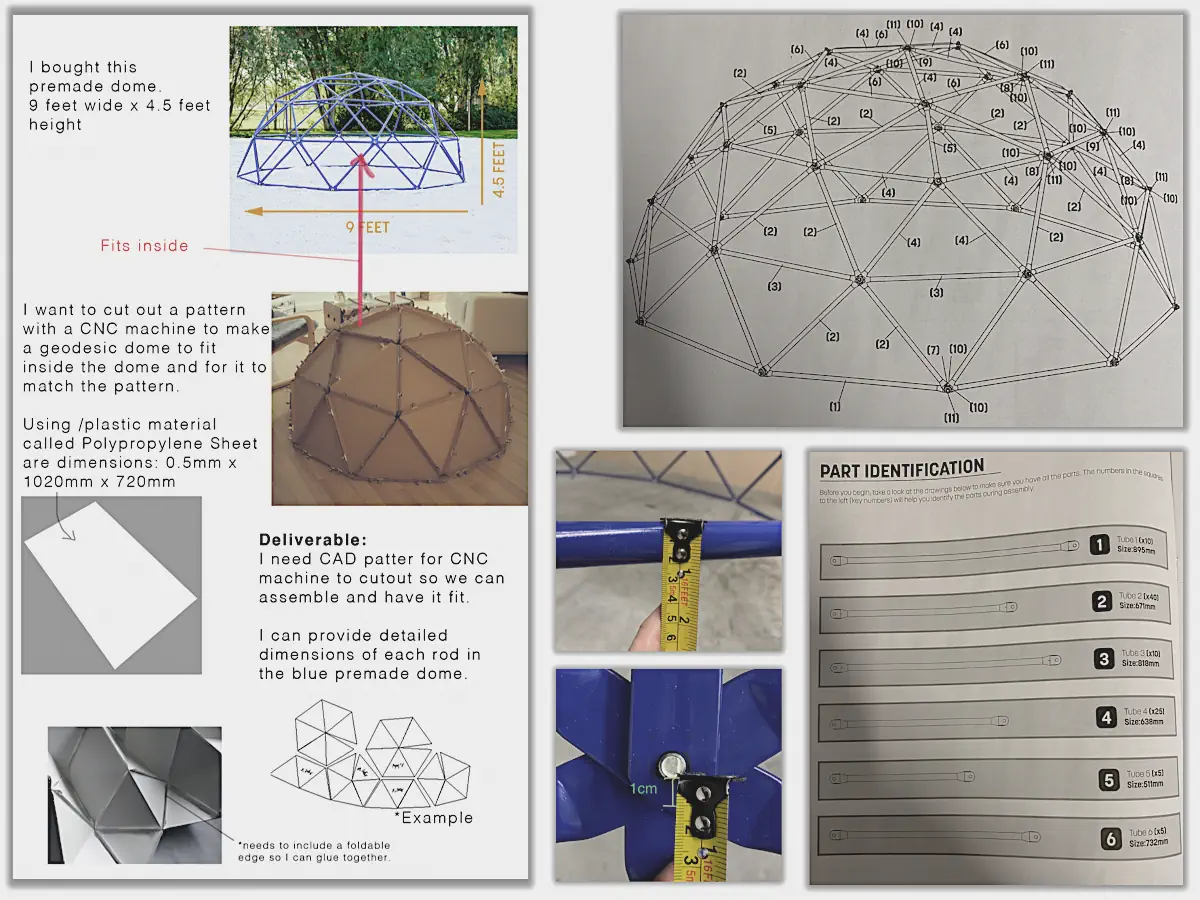
Part of the initial brief received from the client.
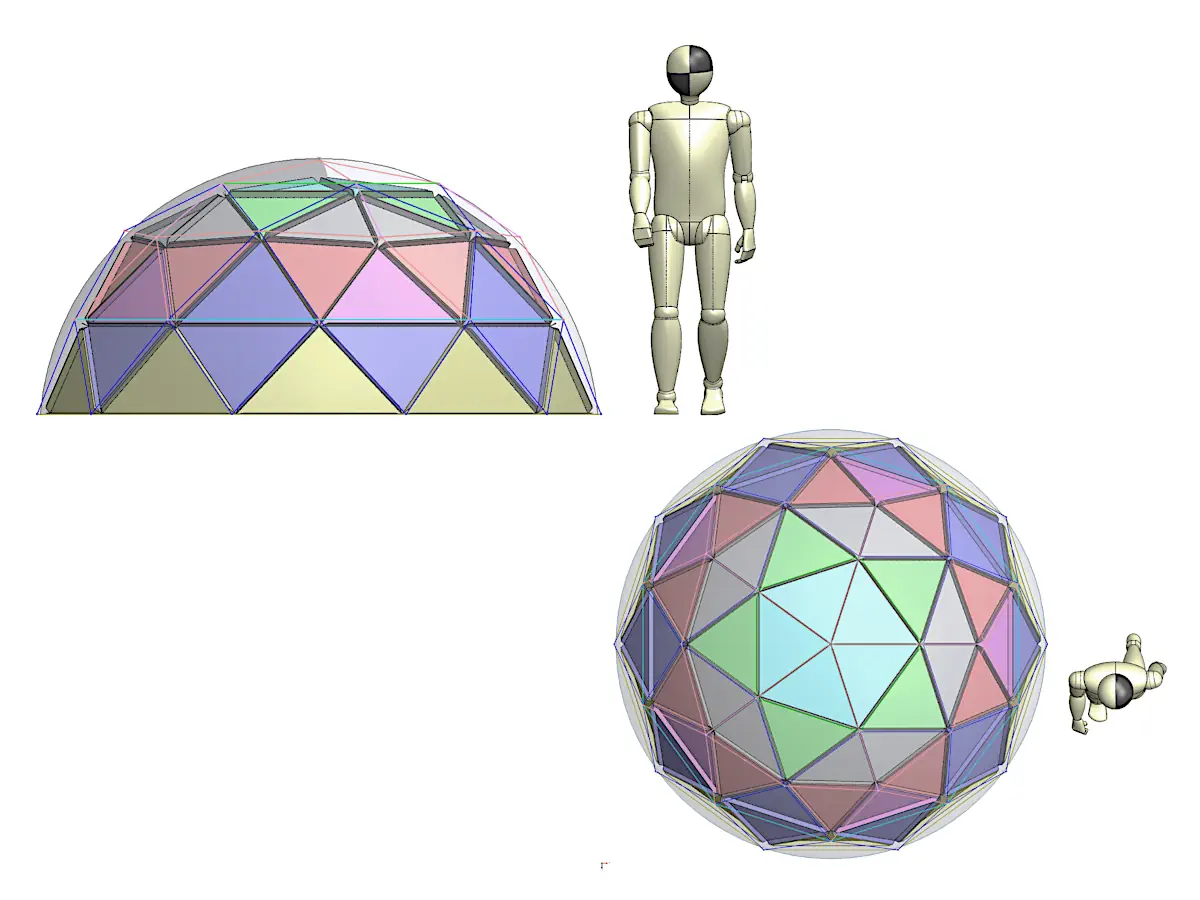
Initial 3D CAD mock-up used to identify the key dimensions for remote survey.
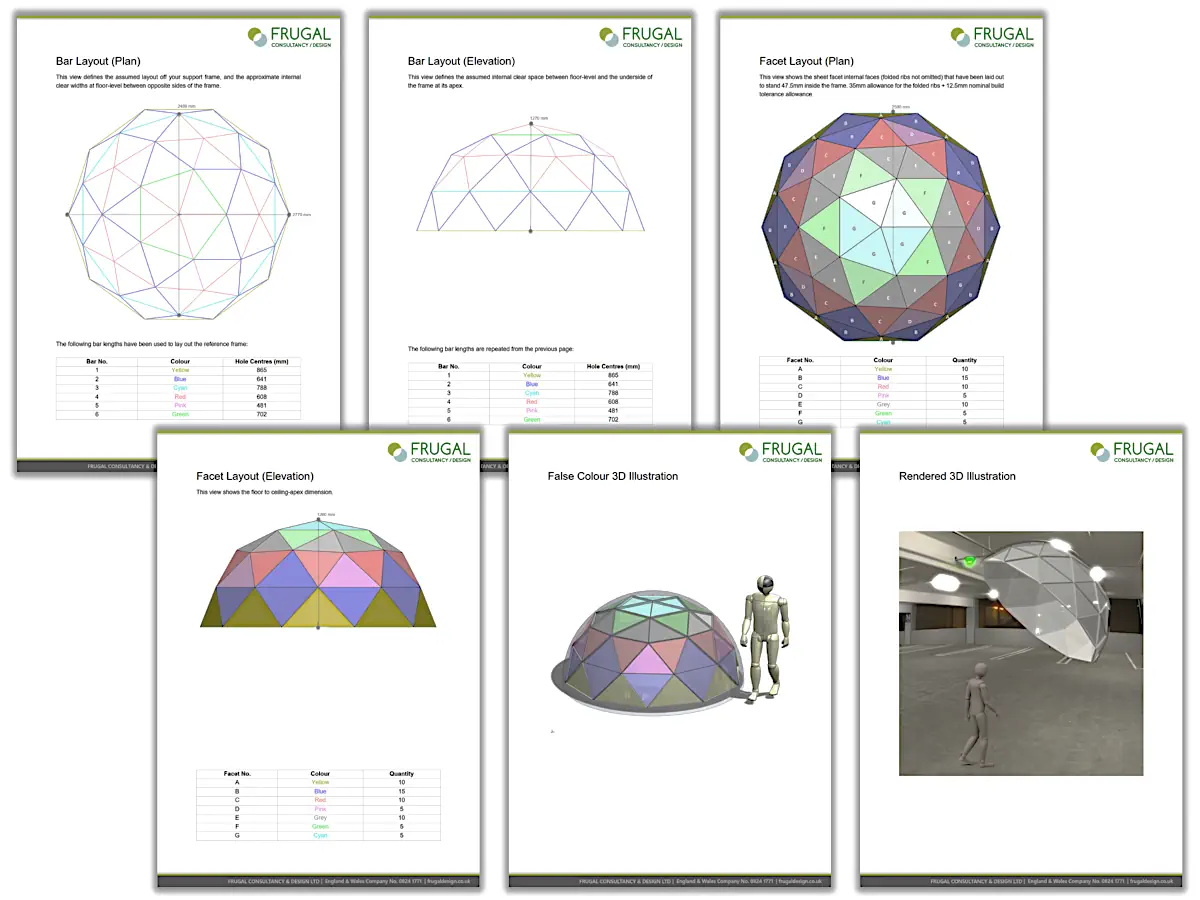
Interim report produced to confirm the developing design basis.
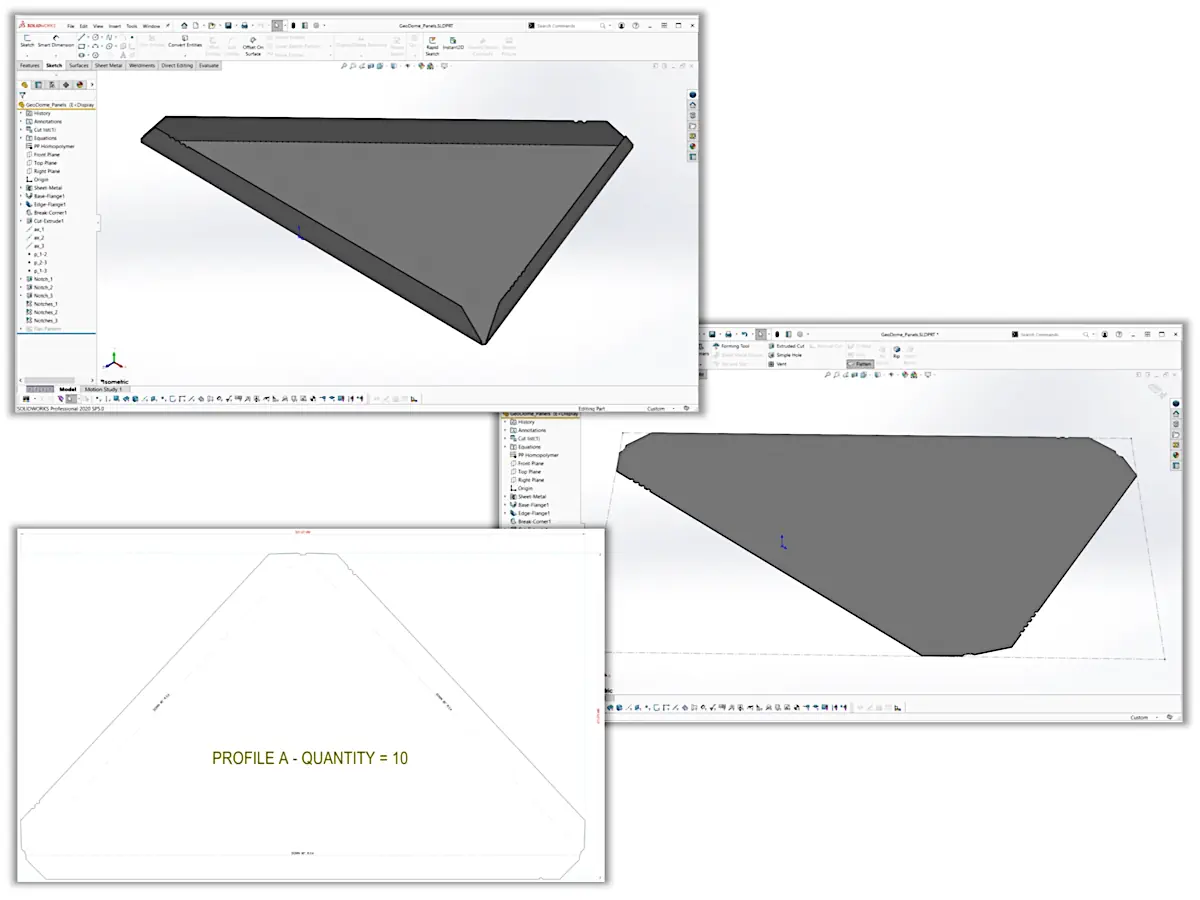
A folded-sheet facet model and its corresponding 1:1 cut profile.
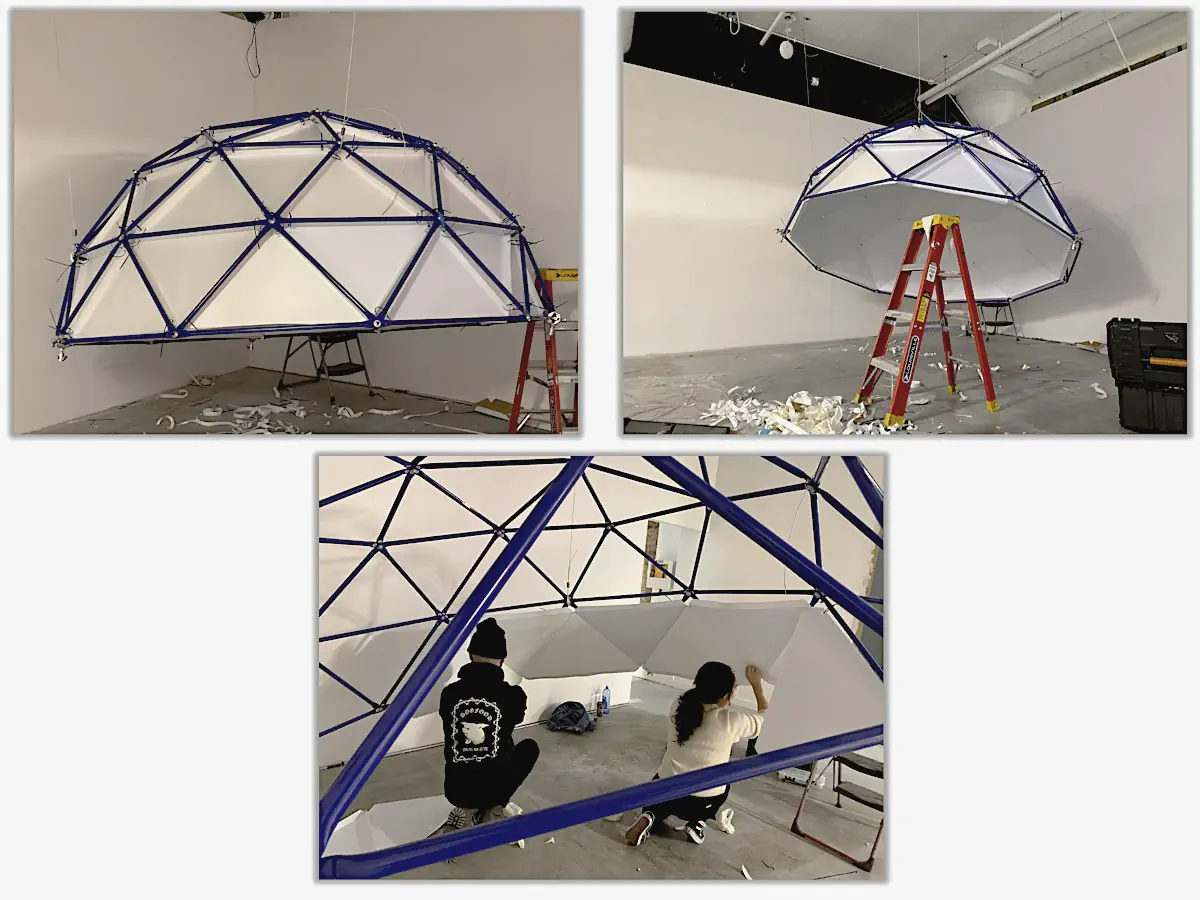
The completed screen assembled in Chicago, including one view during client-led assembly.
Outcome
Frugal developed a buildable folded-polypropylene screen system around the client’s existing geodesic frame, using a remote survey-and-modelling approach to establish the geometry to a level suitable for manufacture.
The issued flat patterns were cut locally in Chicago, folded and assembled by the client, and fitted successfully to the frame without redesign.
What this enabled
The client was able to create a bespoke 3D projection surface using an off-the-shelf steel frame, locally cut polypropylene sheet and a build route that could be managed independently.
This provided a distinctive installation for projection-mapped advertising content without requiring a specialist screen supplier or a prolonged trial-and-error development cycle.
Client feedback
Eddie Yang, CEO & Co-Founder
Visual Feeder, Chicago
Got an engineering design problem to solve?
Tell me what you’re dealing with and I’ll let you know whether I can help.