
Wind turbine tilting mast: independent structural verification before manufacture
Independent structural verification of a client-designed tilting mast in the 15–20 m height range, combining FEA, manual checks and a formal substantiation report.
Sprint
Renewable energy
Structural substantiation
FEA and manual calculations
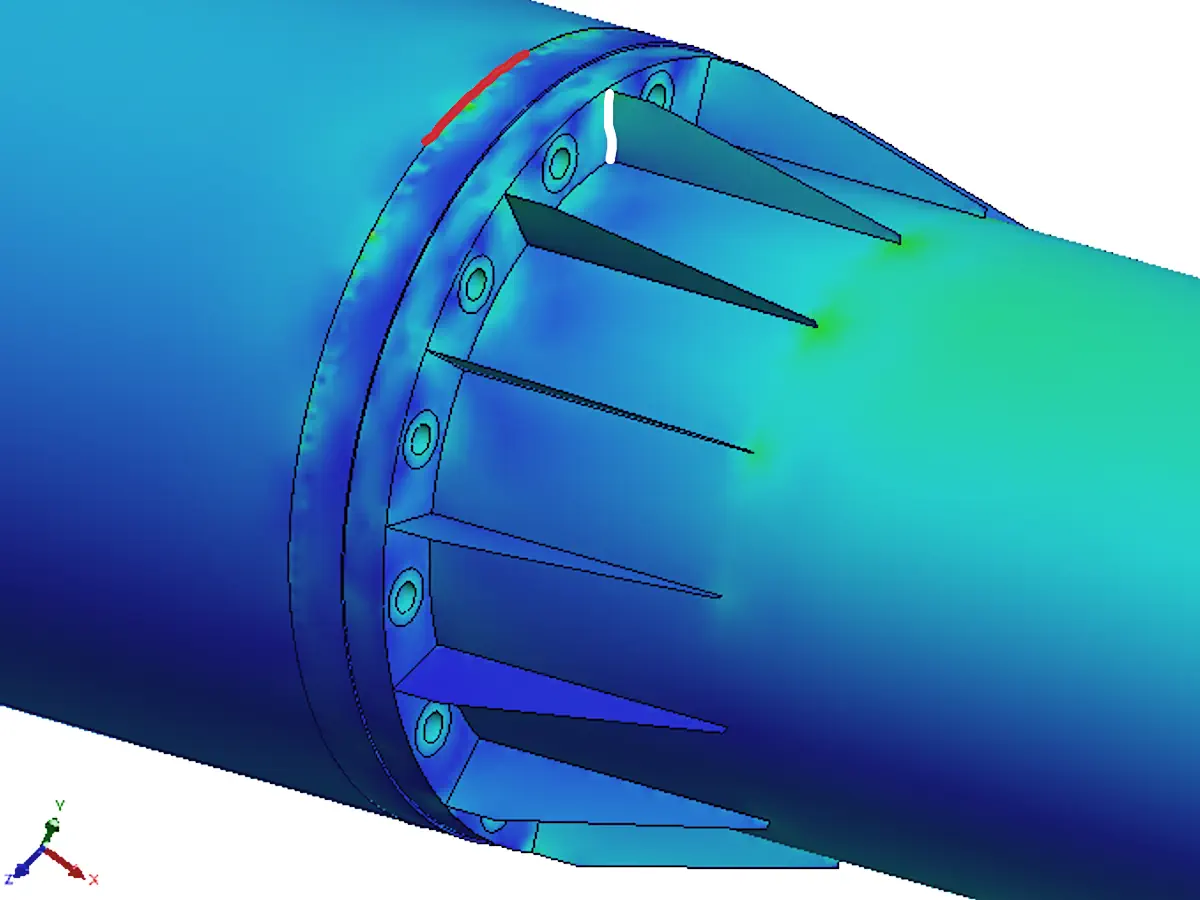
Example FEA stress plot from the structural report
Situation
A wind turbine manufacturer had developed a tilting mast in the 15–20 m height range and needed independent structural verification before manufacture.
The commission covered the mast structure and hydraulic lowering arrangement across the relevant operational and maintenance positions. Frugal was engaged to establish the assessment basis, complete the FEA and supporting manual checks, and document the findings in a formal structural substantiation report.
The real problem
The work extended well beyond checking an upright mast under a single static load case. The structure had to be assessed in its raised, lowered and intermediate maintenance positions, including the behaviour of the hydraulic lowering arrangement.
The verification also needed to address global strength and deflection, support reactions, local structural details, modal behaviour and fatigue. This required an engineering-led assessment strategy that identified the governing cases and presented traceable evidence for design review.
Constraints
Client-owned detailed design: Frugal assessed the mast, identified areas requiring revision and advised on practical changes; the client incorporated those changes into the detailed design.
Multiple analysis scenarios: verification had to cover the raised, lowered and critical-angle positions encountered during operation and maintenance.
Multiple assessment criteria: strength, deflection, support reactions, utilisation, modal behaviour and fatigue all had to be assessed.
Hybrid FE modelling: the structure required a mixed shell and solid model, multiple materials and realistic representation of its mass distribution.
Representative turbine loading: the turbine was outside the detailed FE model, but its mass distribution and representative geometry had to be included for accurate loading and modal results.
Client:
Wind turbine manufacturer
Role:
Independent design verification consultant
Structural analysis consultant
Period:
2024
Scope:
Structural FEA and stress analysis
Manual verification calculations
Structural substantiation report
Acceptance basis:
Client-supplied design and loads
Eurocode 3:
- Strength, joint and fatigue provisions
Supporting guidance from:
- BS 7608
- BS EN 61400-2
- BS EN 40-3-1
- CD 354
Key moves
Built a reference model and FE model suite
- Produced a 3D reference model from the client drawings and 3D data for geometry checks, measurement, illustrations and FE model generation.
- Built the analysis models required for the different mast positions and assessment types, including strength, modal and fatigue analysis.
Established the load regime and ran the verification
- Defined the loading basis and applied it across the model suite for the relevant operational and maintenance conditions.
- Solved and reviewed the models to identify the governing cases, critical details and areas requiring revision.
Advised on revisions and verified the final design
- Presented the initial findings and advised the client on practical options for addressing the areas requiring revision.
- Updated the FE models to reflect the revised design and re-ran the analyses, with the revised arrangement meeting the defined acceptance criteria.
Documented the verification in a formal report
- Collated the final results into a structural substantiation report covering the design basis, applicable standards, modelling approach, load cases, governing results and conclusions.
- Completed supporting manual calculations to cross-check the FE results and finalise the verification package.
Selected snapshots
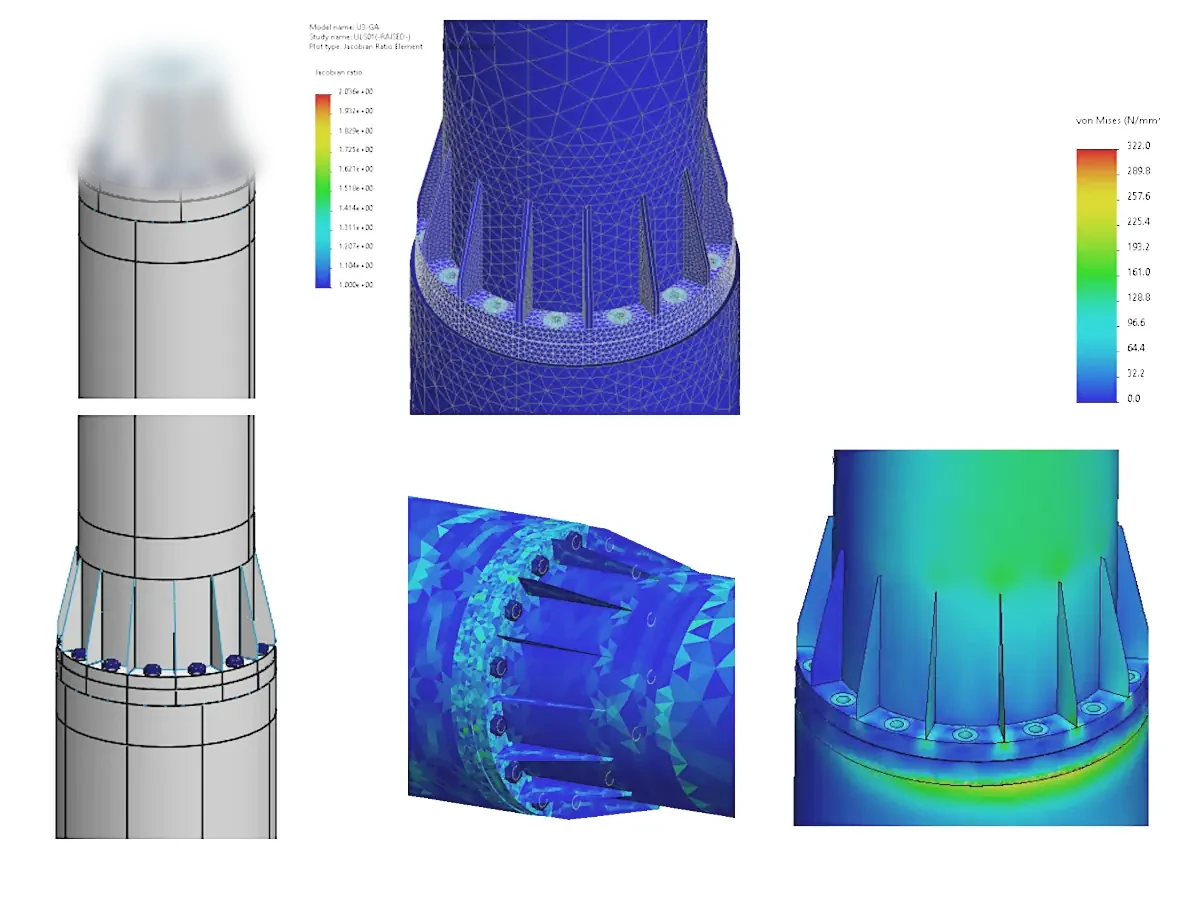
Cropped FEA model views, showing mast shell geometry, mesh quality checks and example stress results.
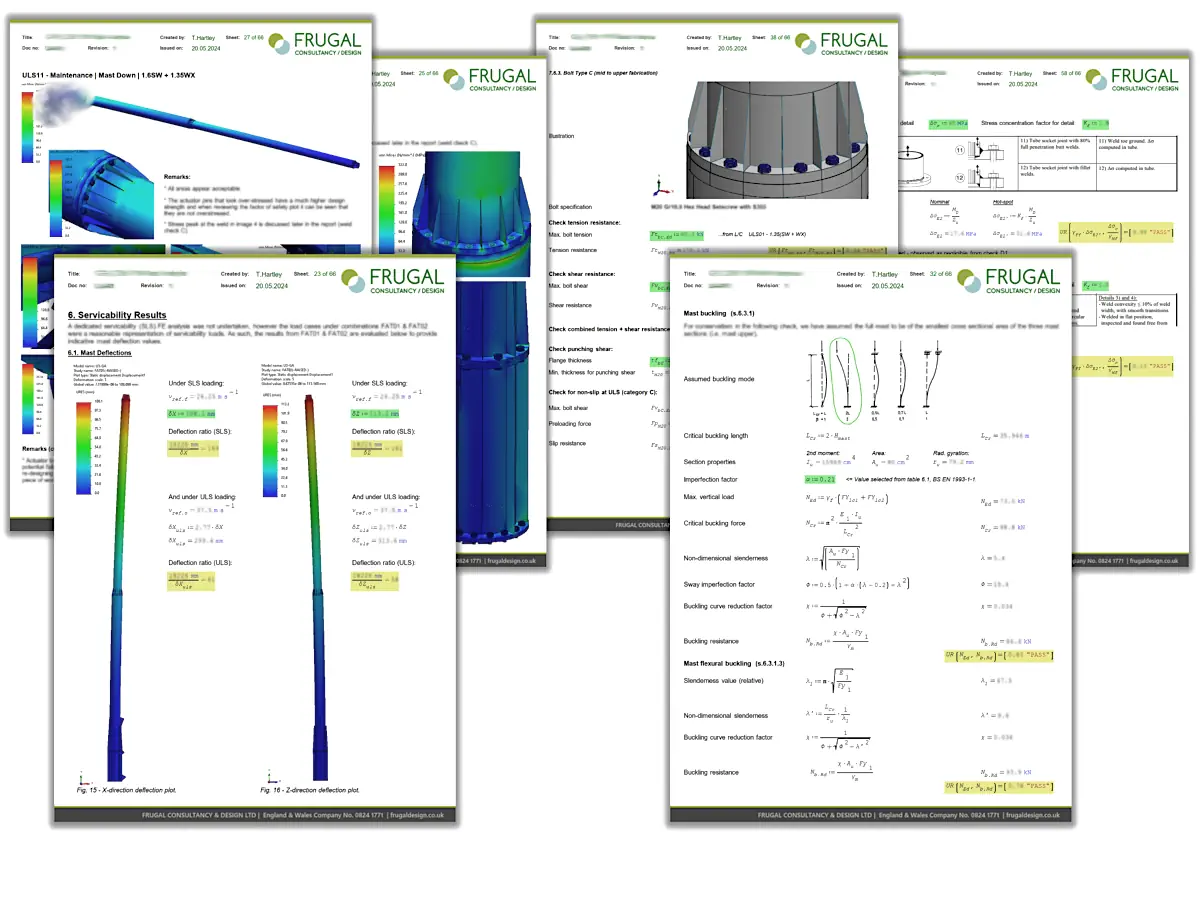
Selected extracts from the structural substantiation report.
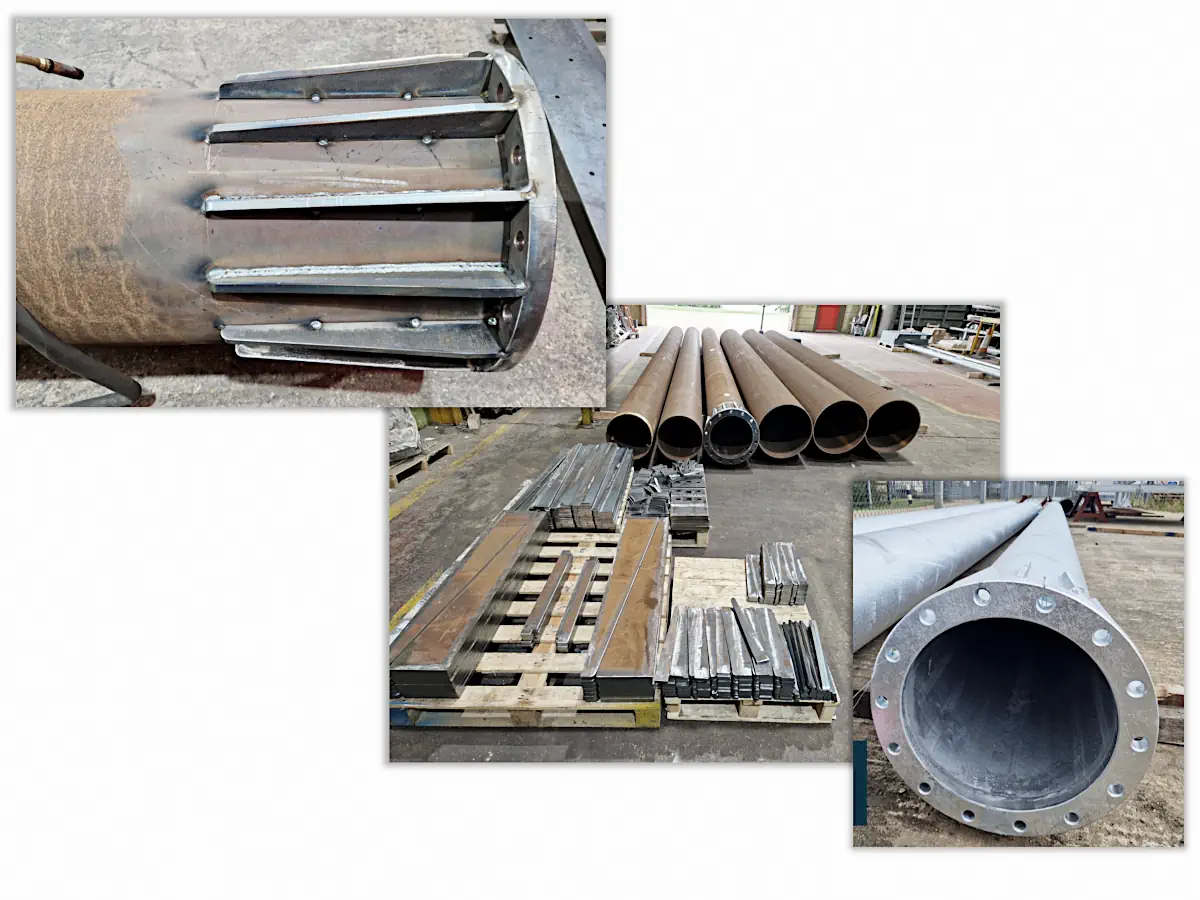
Fabricated mast sections and connection details during manufacture, before and after finishing.
Outcome
What this enabled
Got an engineering design problem to solve?
Tell me what you're dealing with and I'll let you know whether I can help.