
UK steel tariff cost reduction
Reduce steel tariff costs through product design optimisation
If rising steel costs are squeezing product margins, the answer may be in the product itself.
Frugal helps product-owning manufacturers identify and realise cost-saving opportunities across individual components, complete products and wider product ranges, helping restore margin and strengthen competitiveness.
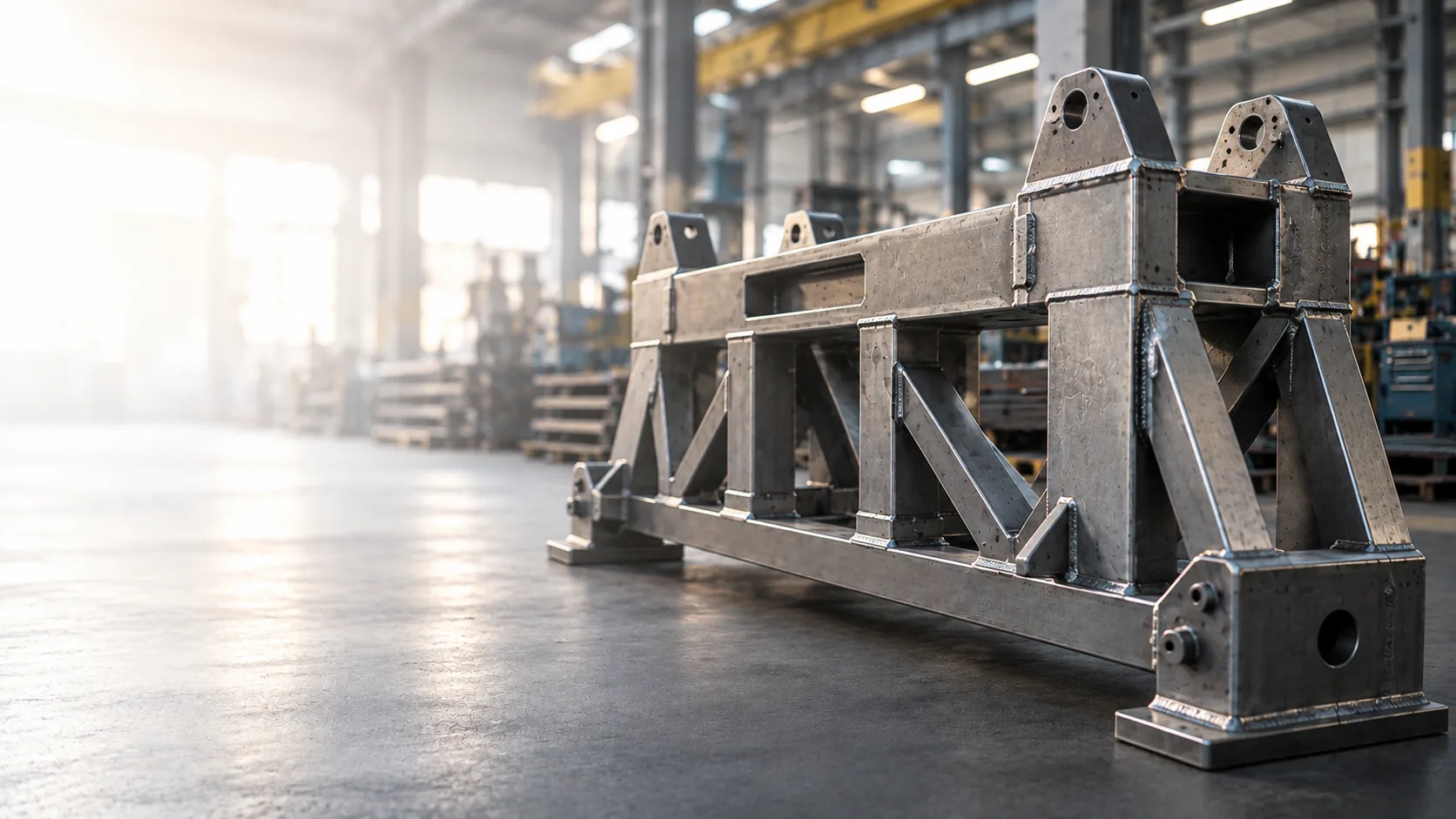
Get your designs fit for today's cost reality
Key insight
The steel tariff is external. Your product cost structure is not.
Where do cost savings often hide?
Frugal has a long history of delivering design cost reductions across steel fabrications and other products. Our cost-reduction reviews typically consider areas such as:
-
User needs, product functions, and the value relationship between them
Features can survive long after their value has diminished. Where a feature adds little customer or operational value but carries disproportionate material, fabrication or assembly cost, it may be a candidate for simplification or removal.
-
Functional requirements, load paths, product architecture and geometry
Products often evolve through successive additions and modifications. The result can be unnecessary complexity, inefficient load paths, duplicated structure and geometry that carries more material than the actual duty requires.
-
Current standards, loading assumptions and calculation methods
Older products may retain conservative assumptions, historic allowances or margins that are no longer appropriate to the current design basis. Reassessment can reveal where material has accumulated through successive layers of conservatism.
-
Material forms, grades, conditions and make-or-buy decisions
Expensive sections, materials, processes or bespoke parts may have become embedded in the product even where more economical alternatives now exist. Previous make-or-buy decisions can also become outdated as volumes, suppliers, manufacturing capability and costs change.
-
Design for manufacture and assembly
Simplify how the product is made and assembled to reduce part cost, manufacturing operations, assembly effort and the other recurring costs that multiply with production volume.
Steel cost reduction review
Find the opportunity before committing to the redesign
-
Defined first review
Start with the existing product, establish the current design basis and baseline cost position.
-
Quantified opportunities
Identify where worthwhile savings appear to exist, what they may be worth and what would be involved in realising them.
-
Redesign where justified
More detailed engineering only follows where the likely commercial return warrants it.
How much cost is still locked into your product?
Previous redesigns have delivered substantial reductions in total product cost and steel weight by challenging the design basis, structure and manufacture.

21%
product cost reduction
Mobile yard ramp range
The established range was reassessed from the specification upwards, removing unnecessary material, fabrication effort and complexity while rationalising the wider product family.
The result was a substantially lower recurring cost base, healthier margins and a stronger competitive position for UK manufacture.
20%
steel weight reduction
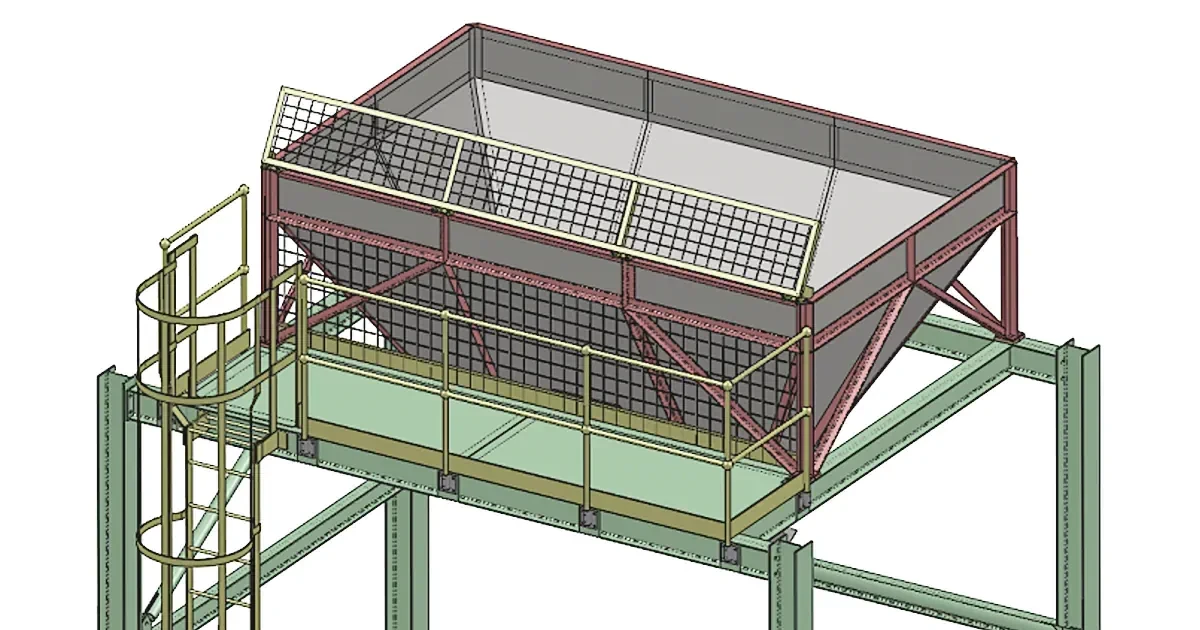
Hopper + access platform
A workable concept was rationalised before manufacture, stripping out unnecessary steel, reducing part variety and simplifying the frame architecture, interfaces and assembly logic.
The result was a lighter, lower-cost structure with more commonality, less fabrication effort and a clearer route to construction.

14%
steel weight reduction
Submersible slurry pump
A pump assembly was reworked part by part, using FEA to challenge inherited wall thicknesses, cast features and support details against defined load cases.
The result was a materially lighter design with less steel tied up in each unit, while retaining the core architecture and opening up simpler fabricated alternatives in selected areas.
Why can a review make commercial sense?
The question is not only what a review might save, but what maintaining the existing cost structure could cost if competitors adapt first.
A small review is an asymmetric bet
You don't need to recover all of it
A lower-cost product stays lower-cost
Further information
Current UK steel tariffs
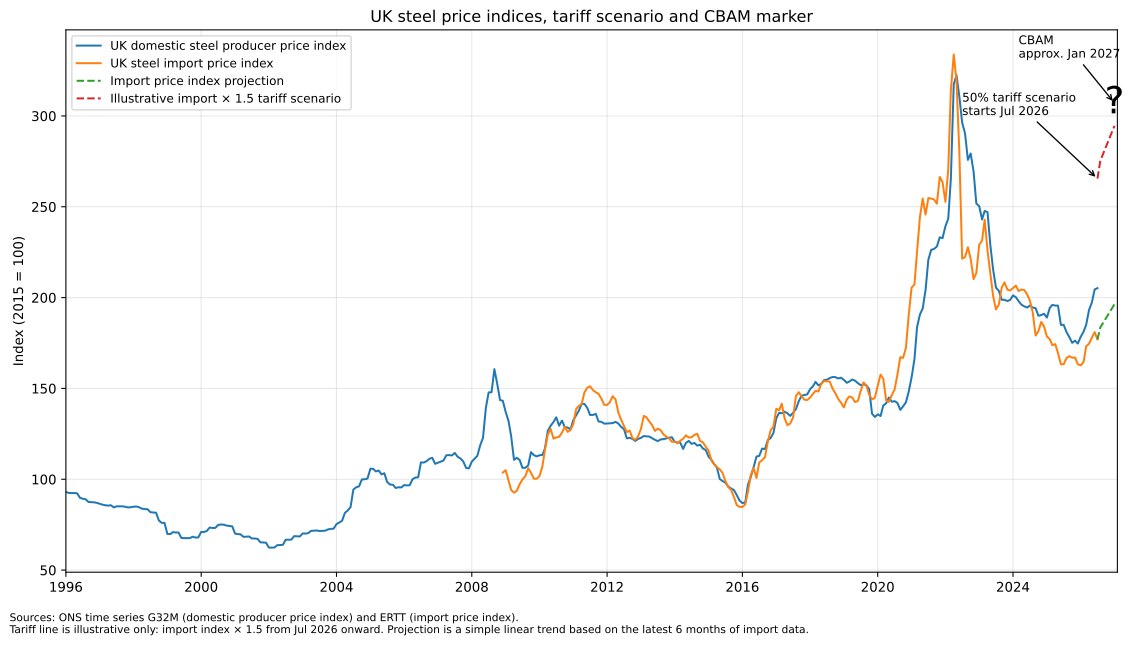
Since 1 July 2026, the UK has reduced tariff-free steel import quotas by 51% compared with the previous safeguard measure. A 50% steel tariff applies to affected out-of-quota imports.
But for manufacturers, steel tariff mitigation does not have to mean avoiding the tariff itself. Product redesign can reduce steel tariff impact by lowering total product cost and helping to reduce steel content where justified.
Source: GOV.UK: UK steel trade measure (opens in a new tab)
UK CBAM on steel from 2027
From 1 January 2027, the UK carbon border adjustment mechanism (CBAM) will also place a carbon price on specified imported goods in the iron and steel sector, based on their embodied emissions.
This is a separate mechanism from the steel tariff and can create an additional source of cost exposure for affected imported steel products.
The same design response remains relevant: reduce unnecessary material, simplify the product and lower the steel, tariff and carbon-cost exposure built into each unit.
Common questions
Practical questions about likely savings, design constraints and starting a review.
Explore the rest of the site
Find out more about Frugal and the way we work.